A report from the Osler Lecture, Meeting Minds, 2025, Oxford University.
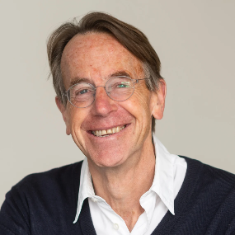
Speaker: Professor Sir Rory Collins1, UK Biobank Principal Investigator, and one of TIME Magazine’s top 100 most influential people in health.
What is the UK Biobank?
I had heard of the UK Biobank before. Along with the Human Genome Project, I was vaguely familiar with the words, but didn’t really know what it actually was. However, having attended this fascinating talk by Professor Sir Rory Collins, I now know a whole lot more.
In a nutshell, what is it for?
Essentially, the UK Biobank is a massive resource for medical research – a mega-sized health database, that anyone can make an application to use. It involves half a million participants and decades of health data. It goes deep, incorporating imaging, samples of blood and urine and saliva, vital statistics, blood pressure, genetic sequencing, medical records, lifestyle information and much more.
It was launched in 2005 to meet a need for larger sample sizes. A databank this large could allow big enough studies to be conducted to detect real patterns and understand risk factors in conditions such as heart disease, diabetes and dementia. Before the Biobank, most studies only investigated a few risk factors and didn’t have stored blood samples.
I suppose now AI is going to be added to the mix to make sense of these vast amounts of data. Ultimately, this should enable scientific discoveries which should improve all of our health.
When was it launched?
Well, it was a bit of a juddery start. Getting funding was a challenge – it cost over 60 million pounds to get going – but ultimately the Wellcome Trust and Medical Research Council came through. They had to contend with naysayers – there was even a paper in the Lancet in 2003 criticizing it for being too expensive and diverting money from other areas. (To date it has cost much more – around a billion – but it’s been funded by a mix of government, industry and charities).
Enter Sir Rory Collins
Sir Rory studied medicine at St Thomas’s but didn’t think practising clinical medicine was for him. He went into epidemiology and became known for his work in large scale trials.
In 2005, when the Biobank was struggling to get off the ground, he got a surprise call from John Bell while on holiday in Ischia. The first CEO had just been dismissed, and Rory was asked to step in.
He realised the IT systems that his team in Oxford had built for clinical trials could be adapted for the Biobank’s needs — and he accepted the challenge/poisoned chalice. Under his leadership, the project has not only survived but thrived, earning him the title Sir Rory.
Who are the subjects?
Half a million people who were between ages 40 – 69, in the years 2006-10, in England, Scotland and Wales.
Why this age range? So the people were old enough to show early risk factors, but young enough to be tracked as the developed illnesses in the following decades.
(I might have just squeezed in, however I now realise the reason I hadn’t really heard much about the biobank is because I was still knee deep in nappies and getting most of my news from the Happitots toddler group.)
What did they measure, and how?
In over 20 assessment centres (often in shopping centres) participants were invited to enter data using touchscreens (used because it was so cost effective, despite the fear that people wouldn’t be able to operate such futuristic tech!) Blood pressure, height, weight, vision, hearing, and reaction times were recorded; blood, urine, and saliva samples were taken.
Participants also had interviews with nurses, and later, 100,000 underwent imaging: DEXA scans, MRI brain and cardiac scans, and even carotid ultrasounds.
A lucky £20 million Government health research budget surplus meant they could also add genotyping — measuring about 1 million markers across the genome.
Genetic Data
The first general biobank data was made available in 2012. The genotyping data became available 2017. This enabled studies of genetics which hadn’t been possible before. You inherit genetic material in “clumps”, so genotyping provides valuable information about the whole genome. For example, you could look at certain genotypes and the relation to blood pressure of them and genetic information near them.
There is also the discovery of various polygenic risks. This means: even if someone doesn’t carry a single high-risk gene, like BRCA1 or BRCA2 for breast cancer, we might find they are still at the same level of risk of these diseases as if they had that high-risk gene. That’s because a cluster of many smaller-effect genetic information, when inherited together, can add up to create the same level of risk as the single problem gene.
A surprise about Type 1 Diabetes
One striking finding: Type 1 diabetes can appear at any age, not just in childhood.
I always thought that type 1 tailed off in the early 20s, and the only reason we didn’t call it “juvenile-onset” any more was because children were getting “late-onset” in their teens. But no – type 1 continues to occur throughout the decades.
That means if a middle-aged patient isn’t responding to Type 2 diabetes medication, clinicians should consider that they might actually have Type 1, and need insulin. Misdiagnosis is surprisingly common.
So if you have a patient in their 30s, 40s, 50s or even 60s who has been diagnosed with type 2 diabetes, keep an open mind.
What on earth is the exome?
We’ve heard of the genome — the full set of DNA. I’d never heard of the exome though. But now I know, the exome is just the 1–2% of the genome that codes for proteins, and it’s where about 85% of disease-causing variants lie.
Regeneron, a genetics sequencing company, along with Glaxo Smithkline, has decided that instead of sequencing the entire genome, they would sequence the exome.
This is helping to identify new approaches for treatments. In addition, recent studies have identified various distinct protein patterns linked to depression, which could one day lead to more personalised, targeted treatments.
Discoveries about dementia
Biobank data has also allowed researchers to track lifestyle and behavioural changes long before diagnosis. Some changes once thought to cause dementia — like reduced activity — may actually result from the disease’s early stages.
However, clear risk factors remain: smoking and high blood pressure still strongly increase the risk of vascular dementia.
Where is the data stored?
For the nerdier among you, the data is on a cloud-based platform known as the Research Analysis Platform. It is held on Amazon Web Services “cloud” in the UK. It is open access, but you must be approved. The general public can’t just download it. And it is anonymised.
Are there other biobanks
There are 2 other large databases: the Chinese Kadoorie Biobank which gives excellent data on Asian subjects, a new UK mega biobank, called Our Future Health, which is currently recruiting subjects aged 18+ and plans to include 5 million people.
But the UK biobank is currently exceptional for its scale, depth and open access, as well as already having 20 years of health follow-up. Professor Collins describes it as a “prism” for any scientist, anywhere.
You can find out more about the biobank at its official website
You can even attend their conference in London on December 8th 2025 for a small fee, or attend online virtually FOR FREE! CPD doesn’t come any cheaper than that…
Huge thanks to Sir Rory Collins, who I imagine is a very busy man, for checking the text and correcting any inaccuracies.
Thanks for reading, as ever. My goal is to make osteopaths and other manual therapists more informed about medicine and research, and I hope this adds another important piece to the jigsaw.
- Professor Rory Collins is Head of the Nuffield Department of Population Health at Oxford and BHF Professor of Medicine and Epidemiology. He co-founded the Clinical Trial Service Unit in 1985 and became Principal Investigator of UK Biobank in 2005. His research focuses on large-scale epidemiological studies of cardiovascular disease and cancer. He was knighted in 2011 for his contributions to science and has played a key role in advancing medical research globally. ↩︎
 osteofm