We moan about modern life, but it comes with some fantastic new things. It’s not just YouTube and Vinted. You can now buy your own over-the-counter medical testing kits from the supermarket. In fact, you needn’t even leave the house. There are cheap tests available online from Amazon and Ebay – not just for pregnancy, or covid, but for low thyroid, vitamin D, your sperm count, or even low ferritin (which is the protein that stores iron).
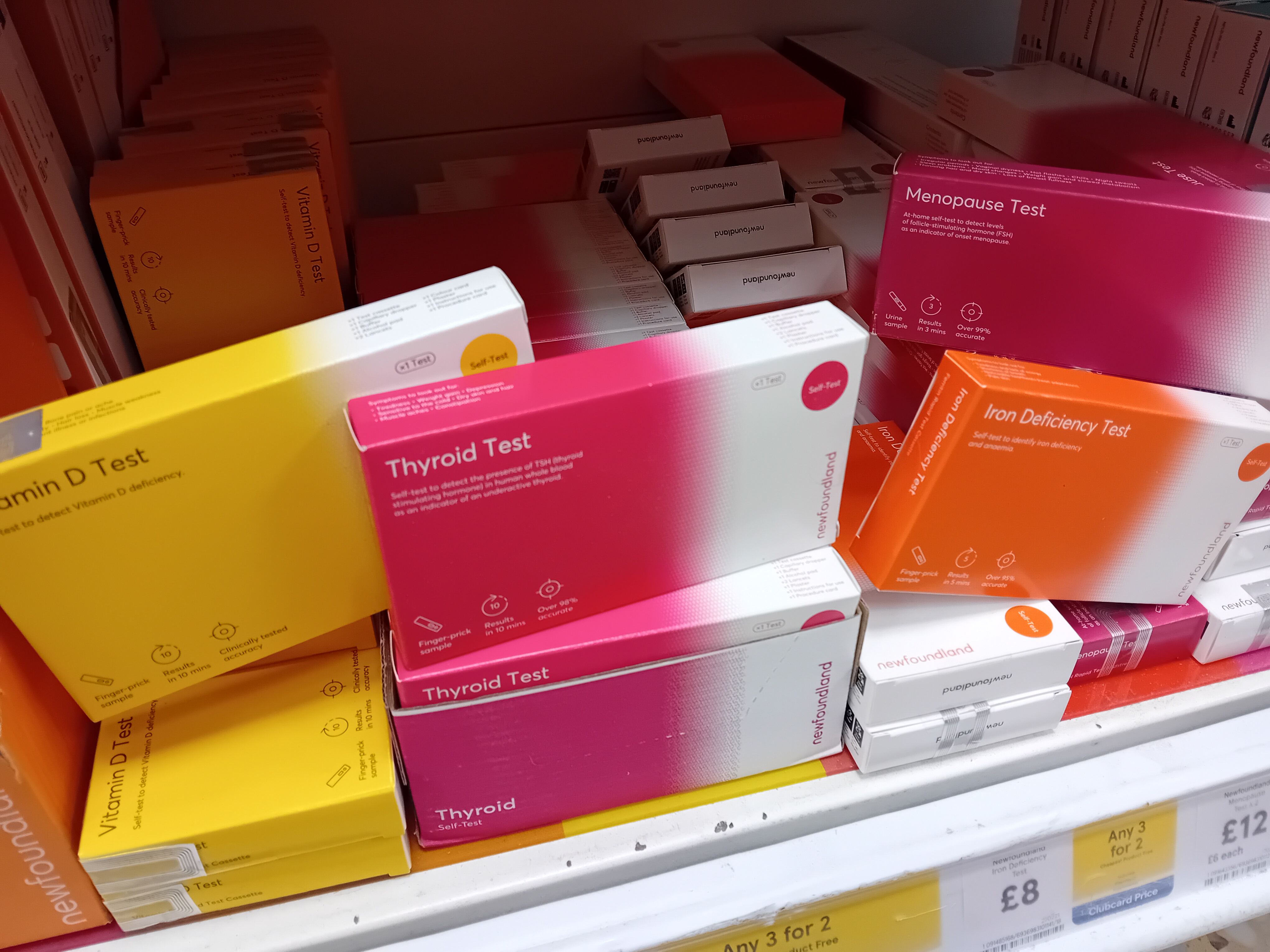
I do love a medical test so I tried a few, just for fun, and – lo and behold! – one of them told me I was ferritin-deficient. I wasn’t sure how reliable they were, in general, but I turned up at the GP and proffered my little piece of plastic with its lonely single stripe. The doctor suppressed a sigh, and obligingly sent me for a proper full blood test. I discovered I had extremely low iron levels, although I wasn’t actually anaemic. This was something of a surprise. I hadn’t even felt ill, just my usual lack of physical stamina and general air of feebleness. I was promptly put on 3 months worth of prescription-strength tablets, and after a couple of months found that I could climb the South Downs with a bit more vigour, without constantly stopping to catch my breath.
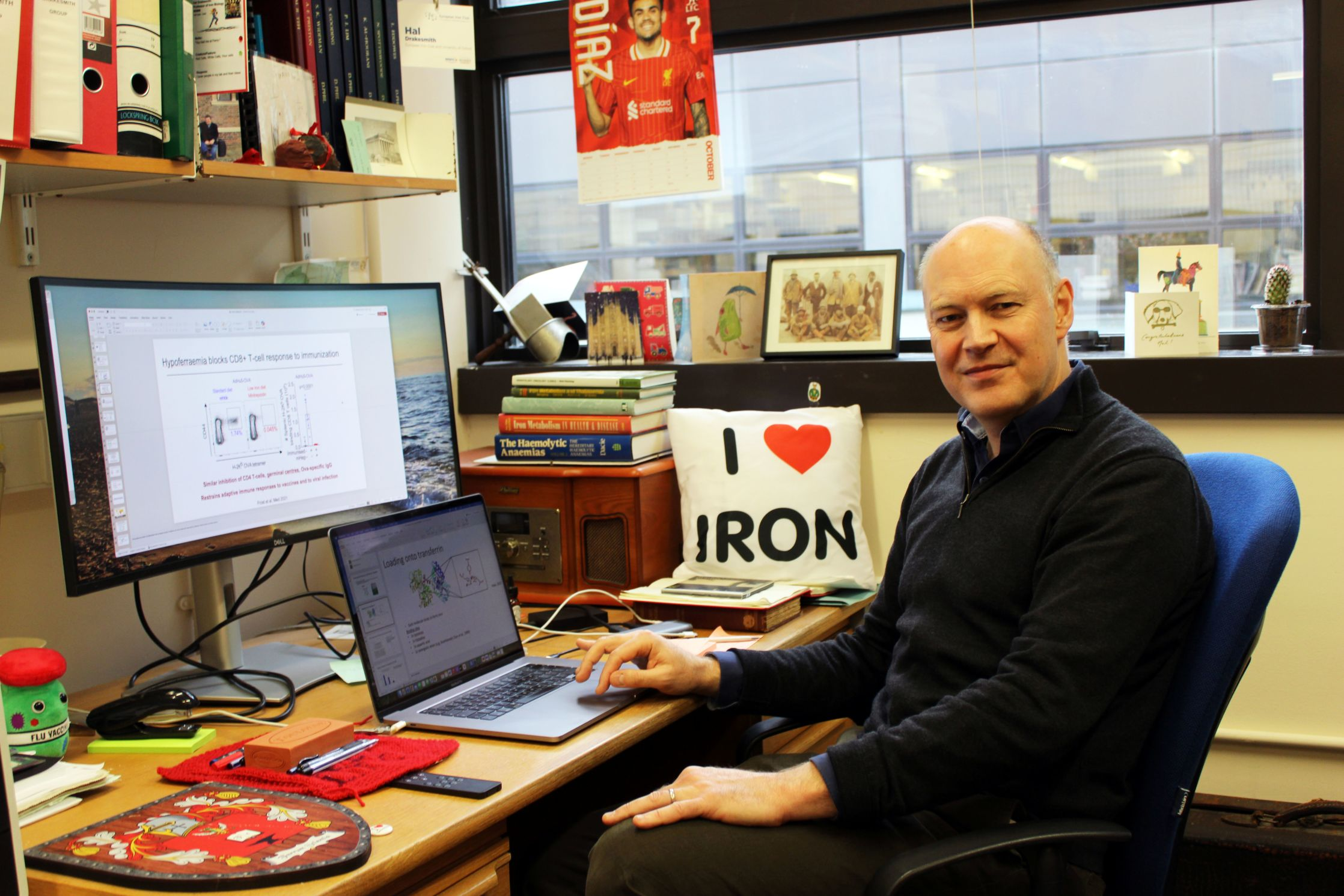
I wouldn’t be alone in having low iron levels. I had no idea it was so common. But according to Professor Hal Drakesmith (and if that sounds like a character in a Marvel film, wait till you hear his job title – Professor of Iron Biology, no less) iron deficiency is the most common nutritional deficiency round the world. Actual anaemia is an enormous disease burden.
So what does a Professor of Iron Biology actually do? Well, he looks at how iron makes cells work, and what happens to cells if there is not enough iron.
I was at the second of my Meeting Minds 2026 talks and was learning things I felt I should already know. Over 2 billion people are iron deficient globally. That’s a very big chunk of the world population (which still can’t be much more than 8 billion, surely). Women and children are the most vulnerable.
The history of iron deficiency
In fact, in researching this blog, I discovered that iron deficiency in women used to be mistaken for a syndrome called “chlorosis” or “green sickness”, due to the pale/green pallor of these supposedly neurotic females. They also suffered palpitations, dizziness, lethargy, weakness and general fragility. Thomas Sydenham, the “English Hippocrates”, (who by chance went to Magdalen College where I was staying), recommended treatment with iron supplements way back in the 17th century. I’m not sure how he stumbled on this, because it was hundreds of years before it was understood that the reason this worked so well was that lack of iron was the causative problem (rather than idleness, neurosis or caprice).
And what were these 17th century iron supplements? Well, what he gave them was either:
- Iron filings mixed with wormwood and made into pills. (I wonder if they caused their poo to turn black and their bowels to turn to slugs, like the ones the doctor gives you these days?) OR
- Iron syrup, a concoction made with Rhenish wine and sugar. (I imagine this was the original Floradix recipe) OR
- “Iron-rich water” (OK, this one’s definitely the 17th century version of Spatone).

Anaemia 101
Now iron deficiency and anaemia are not the same i.e. the 2 billion plus figure of iron-deficient people includes those who are iron-deficient with or without being anaemic. Let’s have a brief refresher on just how this works.
Anaemia is essentially a problem that occurs when you can’t transport enough oxygen. Now we all know red blood cells (RBCs) are the oxygen-carriers – they have to get oxygen around the body, so that it can get into the mitochondria, to help make ATP to power us up. How do these RBCs carry it? On haemoglobin.
What is haemoglobin? It’s a large molecule. (Well, everything is relative; large in molecule terms but extremely tiny in the real world.) It has 4 haem parts and a globin part. The globin part is a protein, we can forget for our purposes now, but the haem parts each contain an atom of iron. And each atom of iron can carry one molecule of oxygen. Thus each haemoglobin molecule can carry 4 molecules of oxygen. But it needs iron to do so.
(These things are actually unbelievably miniscule. A red blood cell carries about 280 million haemoglobin molecules, i.e. each cell can carry over a billion molecules of oxygen. And red blood cells are so small some of them have to bend over to fit through a capillary. About 25 billion of them fit on a teaspoon. We make around 2.5 million red blood cells per second so a teaspoon of blood is about 2 or 3 hours work.)
To make effective RBCs, you need a steady iron supply. You need to ingest it, then absorb it, then it gets bound to transferrin which carries it around the blood. Some is delivered straight to where it is needed to make haemoglobin (i.e. mostly in the bone marrow – where we make our RBCs); some is stored, principally as ferritin, in the liver and other tissues. You can think of this as your iron bank, or reserves. So you can be running down your ferritin stores without it yet affecting your haemoglobin levels. (Cash in your current account, none in your savings!) This is what I had, which is iron-deficiency without anaemia. I’m still unsure as to the extent to which the ferritin deficiency could have been causing me to feel weak and tired.
Aren’t there other causes of anaemia?
Yes. Various things can cause anaemia which are not due to iron-deficiency, but iron-deficiency is the most common one. Without getting sidetracked, the others include folic acid deficiency, B12 deficiency, aplastic and haemolytic anaemias, and congenital diseases like sickle cell and thalassaemia. But Professor Drakesmith is looking into iron-deficiency.
He told us that the percentage of people with anaemia is high – especially in lower and middle income countries. 80% pregnant women in sub-Saharan Africa are anaemic. Even in the UK, though, 25% of women in the UK are anaemic. Levels are particularly high in premenopausal women who lose iron through menstruating, and children, who have a high demand due to their rapid growth.
So we need to supplement?
Hey, it’s just a deficiency, of a known nutrient. Easily solved, you would think. Vitamin C for scurvy, vitamin D for rickets, B12 for fatigue, Iron for iron-deficiency. Simples. Just take some iron, that will sort it out. Bish Bash Bosh and Bob’s Your Uncle. It worked for Thomas Sydenham.
But it’s not always quite that simple.
What happened in Pemba Island?
Around 20 years ago, there was a randomized clinical trial in Pemba Island, which is near Tanzania. Amongst the lush green hills and clove plantations, there is a great deal of childhood anaemia. So, the obvious intervention was to give iron supplementation to the children. However, that part of the world is also a malaria hotspot, and the trial had to be stopped as there was a rise in infectious diseases, including malaria. It seemed that the iron was actually promoting some microbes.

Ideally the iron should be transported to red blood cells, not bugs. And not just red blood cells – the immune system needs iron, B Cells need iron, we need it to repair DNA, to metabolise cholesterol. So we need to understand how the iron is trafficked around the body.
How are they investigating this?
Professor Drakesmith and his team have got hold of a machine (which is also used to track meteorites). It can count iron atoms in individual cells. They do have to change the isotope of the iron first. Anyone who has been helping their child with GCSE chemistry might know what an isotope is – something to do with different numbers of neutrons on atoms of the same element, but we probably don’t need to know the detail. All we need to know is that they can make Iron “58” rather than the more general Iron “56”, and Iron “58” can be tracked.
In addition, we need to look at how iron is absorbed, and what might be blocking absorption. Before anyone yells “what about the gut?”, rest assured, at Oxford they are full aware of the wider picture – they know all about gut inflammation and issues of healthy or unhealthy absorption.
It can be difficult to get iron levels up
After months of iron tablets, I still only have a faint second line on my supermarket test. Is it not getting in? Or just taking a long time to get up to the right level? Or am I feeding some bad bacteria? Or, according to Professor Drakesmith, there could be TOO MUCH iron in iron tablets, making their efficacy sometimes uncertain.
They are also looking at plants
What about plants? Well, I have always been told that the iron you get from meat is more easily absorbed than any you get from plants, but I am a committed carnivore and I even eat black pudding on regular basis, and that still doesn’t seem to be enough.
I used to up my spinach intake if I felt pale and frail, till I also heard that this is something of a myth. I’m still not sure on that one.
But the Oxford team are looking at plants, specifically at how plants take up iron, and whether we can use this knowledge to improve the iron content of the food we eat. Iron may be plentiful in soil, but that doesn’t necessarily mean it is available to plants in a form they can absorb. They’re a bit like us!
So the answer to iron deficiency may not only be more iron tablets. It could involve understanding how iron moves through the whole system — from soil, into plants, into our food, and finally into our cells.
Many thanks to Professor Drakesmith for this fascinating and useful lecture, and for checking the facts in this post.
Please go here to read his hot-off-the-press advice on the practicalities of boosting your iron levels. I have discovered where I could be going wrong. I really need to find a fairly long window in the day to take my tablets, in which I am neither drinking tea nor eating. NOT EASY.
Wishing him all the best for his continuing work towards boosting the world’s iron levels.
Thanks for reading


Wonderful article. Really fun yet informative. I love this authors style !
LikeLike